Researchers
Núria Coma-Cros
Introduction
My name is Núria Coma-Cros, and I am currently pursuing a PhD at Erasmus University Rotterdam in the Department of Public Administration under the supervision of Prof. Jurian Edelenbos, Dr. Ron van Duin and Dr. Wouter Spekkink. My PhD project focuses on developing governance strategies for a zero-emission inland shipping sector in the Netherlands by 2050. I hold an MSc in International Development Studies from Wageningen University and a MA in Tourism Destination Management from Breda University, which I have combined with working experience in the tourism and academic sectors. This transdisciplinary background shapes my research approach by leveraging my understanding of the interconnectedness between environmental, economic and social development.
Abstract
Stakeholders in the Dutch inland shipping sector such ministries, ports and trade organizations, have agreed to nearly eliminate emissions by 2050. Yet, 95% of vessels still use diesel engines. To effectively realize this ambition, the sector needs to operationalize its zero-emission vision into governance strategies. However, stakeholders operate in a highly uncertain environment, which makes designing and implementing long-term governance strategies difficult. Academics and practitioners are turning to robust and adaptive governance approaches, which promise to cope with the uncertainty of crises such as climate change or Covid19. However, the extent to which these approaches serve to cope with the uncertainty of actor dynamics and transition dynamics remains unexplored. This PhD project asks: how can the inland shipping sector plan for its sustainable transition in the presence of uncertainty? A combination of qualitative research methods, participatory methods and agent-based modelling will be used.
In answering this question, this PhD project aims to:
- develop new knowledge on robust and adaptive governance;
- create a framework for developing robust and adaptive governance strategies for inland shipping sustainability;
- co-develop robust and adaptive governance strategies that contribute to a zero-emission sector;
- strengthen collaboration between stakeholders through cocreation processes. Overall, this PhD project seeks to accelerate the sustainable transition of the inland shipping sector.
Research article
Dhiraj Kumar
Introduction
Dhiraj Kumar completed his Bachelor’s degree from Graphic Era University and pursued his Master’s degree from Birla Institute of Technology, Mesra, both in Mechanical Engineering from India. With three years of professional experience, he was engaged in two projects funded by the Department of Science and Technology (D.S.T), Government of India. One project focused on estimating hydrogen demand and identifying sites with potential for hydrogen valley in India. The other project involved assessing the technical and economic feasibility of blending hydrogen with coal or other emission-intensive fuels in the cement industry. Additionally, he contributed to an internal project concerning Green hydrogen-based trains. Dhiraj’s research expertise primarily revolves around clean energy domains such as green hydrogen, emission control, Carbon Capture, Utilization, and Storage (CCUS), and decarbonisation. Beyond academics and research, he enjoys playing cricket and reading novels.
In May 2024, Dhiraj Kumar is set to commence his Ph.D. journey at TU Delft, focusing on developing a Digital Twin for Evaluating Emission Reduction Strategies for Inland Shipping.
Abstract
In the Netherlands, inland shipping serves as a crucial component of the transportation network, accounting for 31% of goods transport. The total emissions from Dutch inland shipping are 1.6 Megatonnes of CO2 and 21.2 kilotonnes of NOx. This presents significant environmental challenges, contributing to 13% of CO2 emissions and 37% of NOx emissions in the country’s total freight transport. To address these emissions, this project deals with developing a data-driven virtual representation of the inland waterway transport (IWT). Key aspects such as individual vessel characteristics, logistic chain dynamics, and infrastructure considerations are integrated into the digital twin framework. Through advanced modelling techniques, including energy consumption and emissions estimation, the digital twin enables precise tracking of vessel performance while accommodating operational constraints and regulatory mandates. This research also addresses some technical challenges, including the representation of comprehensive data sets, complexities associated with ship energy modelling, and limitations in sensor availability. The proposed digital twin offers multiple benefits, including performance optimization, predictive maintenance capabilities, route optimization, enhanced energy efficiency, and emissions control. Ultimately, this research will support stakeholders, policymakers, ship operators, and environmental agencies in making informed decisions to promote sustainable inland shipping practices in the Netherlands.
Jayvee Ramos
Introduction
I am Jayvee Ramos, a PhD Candidate in the Mechanical Engineering department at TU Delft. My current focus lies in developing optimization models for inland water transport. My academic journey has been diverse, beginning with earning my BS in Civil Engineering at the University of the Philippines and completing an MS in Maritime Logistics and Technology at Tokyo University of Marine Science and Technology, Japan. These experiences have provided me with valuable perspectives and enhanced my skills as a researcher. As a transport engineer and researcher, I am deeply intrigued by the complexities of transportation systems. I employ various techniques such as optimization, behavioral modeling, and simulation to tackle these challenges. Beyond research, I find solace in nature and enjoy exploring the outdoors. I am always eager to embark on new challenges, particularly hiking trips.
Abstract

Simeon Slagter
Introduction
Simeon Slagter is a PhD Candidate at Delft University of Technology (TU Delft) in the department of Maritime and Transport Technology. His research contributes to the maritime energy transition, focussing on optimization, control, modelling and analyses of green inland shipping. His research activities include developing intelligent control systems for ship operations, integrating energy management systems and voyage planning methods, and integrating state-of-the-art data-driven and model-based control methods. His academic background includes a BSc degree in Industrial Engineering and Management from the University of Groningen, and a MSc degree in Mechanical Engineering – Multi-Machine Engineering track – at TU Delft. Simeon currently conducts his research under the Dutch Research Council(NWO) funded program PATH2ZERO.
Abstract
Simeon Slagter’s research focuses on reducing emissions and improving the energy efficiency of inland shipping through integrated operational decision-support. The research develops novel optimization and control strategies for voyage planning, energy management, and energy replenishment to support low-emission operation under uncertain environmental conditions.
The voyage planning methods account for different propulsion systems and the spatially and temporally varying conditions of inland waterways, enabling propulsion-agnostic and emission-aware operational optimization. Building on this, the research integrates voyage planning with onboard energy management and energy replenishment decisions, allowing speed, power allocation, and battery or hydrogen swapping to be optimized jointly. Finally, hierarchical coordination between strategic voyage planning and real-time energy management is investigated to ensure that operational plans remain feasible while adapting to changing conditions.
Research article

Maryam Pourbeirami
Introduction
Maryam is a first-year PhD student contributing to work package 5 of the Path2zero project, focusing on the future of bunkering infrastructure for inland shipping. Her research leverages her background in logistics and supply chain to design optimal supply chain networks using data-driven solutions. To address this real-world challenge, she employs operations research techniques such as mathematical modelling, optimization algorithms, simulation and data analytics. Through the application of these operations research techniques, she aims to design supply chain networks that are not only efficient but also promote the environmental sustainability of inland shipping.
Abstract
The urgency to address climate change and rising energy demands necessitates the Inland Waterway Transport (IWT) sector to transition towards cleaner energy sources. However, designing functional bunkering networks and appropriately dimensioning individual stations for these zero-emission fuels presents a significant challenge. This research project tackles this gap by focusing on two critical aspects: infrastructure-level design and sizing of bunkering stations, and network-level interactions between upstream energy supply and downstream transport behavior. Bridging these levels necessitates a thorough understanding of current and future IWT energy demands. Therefore, the project will investigate the dynamic relationship between the upstream energy supply chain and the downstream fuel needs of inland vessels.
Existing bunkering infrastructure studies often focus on single fuel types. This approach is inadequate in the face of uncertainty surrounding future alternative fuels. Each fuel possesses a unique supply chain with specific network components. This raises an important question: How can bunkering stations be designed and located when the exact future fuel demands and dominant fuel type are unknown? This research will explore to what extent new energy carriers can be integrated into existing infrastructure, or if entirely separate infrastructure is needed. Additionally, the project will analyze the bunkering processes and safety requirements associated with various alternative fuels suitable for inland shipping. By comprehensively considering potential IWT fuels and their characteristics, a clear picture of future bunkering infrastructure for inland shipping will be provided. This includes recommendations for locations, fueling methods, and optimal fuel storage capacities at bunkering stations.

Richmond Anku
Introduction
Abstract
Conference paper
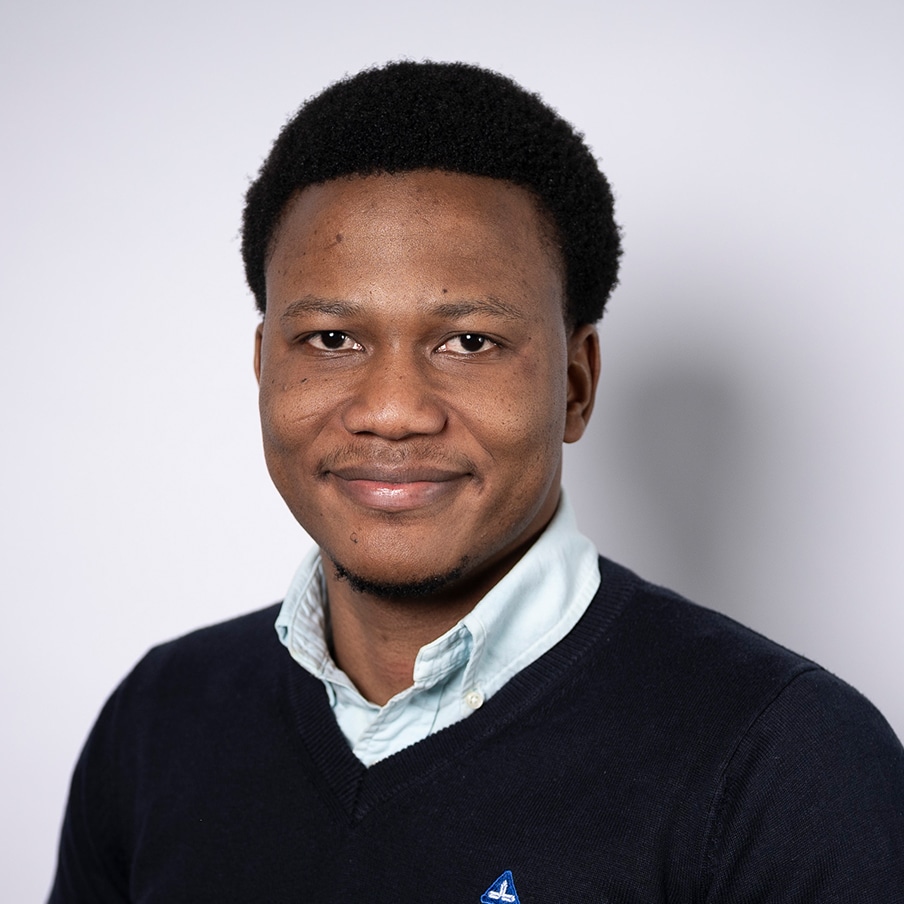
Nader Ranjbar
Introduction
I am Ph.D. candidate at Rotterdam School of Management, Erasmus University. I am a member of the “Zero-emission Transport Chain” working group, of the PATH2ZERO project. My research interests consist of innovation, technological ecosystems, operations optimization and sustainability. I received my Master of Science degree in Naval Architectural Engineering at the Sharif University of Technology in Iran with concentration in ship voyage optimization.
Abstract
Formidable investments are required to achieve zero emissions in inland shipping, while this mission is fraught with technological, market, and regulatory uncertainties. The question is which strategies, business models and interorganizational agreements are mostly likely to alleviate the investment and adoption issues stemming from such uncertainties.
As it is aimed within the 4th work package of the PATH2ZERO project, I focus on new sustainable business models in the IWT ecosystem. I conduct research on developing new chartering and greening options that reap the benefits of new technologies, market opportunities and address the uncertainties at hand. Hence, I research on ways of reconsidering ownership, dealing with a variety of fuels, boosting of entrepreneurship of operators so that they can gain a premium for sustainable shipping, and policymaking that provides incentives to the actors in the logistics and energy systems to perform the transition toward ZE-IWT.
Moreover, I conduct research on Sectoral Innovation to better understand the effectiveness of cross-sector partnerships for developing technologies when the alliance benefits involve a mix of commercial gains and social responsibility. I will collect data on technology development projects by leading vessel builders, with the aim of increasing knowledge on the management of technology development projects that involve a mix of commercial and social objectives.

Hesam Naghash
Introduction
My name is Hesam Naghash, and I recently joined the PATH2ZERO project as a postdoctoral researcher at TU Delft. My work focuses on the decarbonisation of maritime transport, with a background in energy engineering, integrated assessment modelling, shipping economics, and alternative fuels.
I completed my PhD on techno-economic pathways for sustainable shipping, where I studied how future shipping demand, fleet development, fuel choices, emissions, and policy measures interact in the transition towards low- and zero-emission maritime transport. In PATH2ZERO, I build on this background by supporting the integration of different modelling activities across the project, with a particular focus on connecting vessel-level insights, operational analysis, and broader system-level transition questions.
Abstract
My research looks at shipping decarbonisation as a system-level transition problem. This means not only analysing individual technologies or fuels, but also understanding how vessel design, operational choices, infrastructure, fuel supply, policy instruments, costs, and emissions interact over time.
Within PATH2ZERO, my role is to help connect the different models and knowledge streams developed in the project. I focus on understanding the aims, assumptions, inputs, and outputs of vessel design models, operational decision-support tools, and other modelling components, and on identifying how these can be linked in a consistent and useful way.
The broader aim is to support integrated analysis for zero-emission inland shipping. By translating detailed vessel-level and operational insights into a common modelling logic, my work contributes to corridor-level assessment, transition pathway analysis, and decision support for the deployment of zero-emission shipping solutions.